Education

Nerve chart: exploring spinal health & organ function

Your nerve system controls and coordinates the function of every other system in your body. Subluxation at different levels of your spine creates interference to the organs and areas of your body.

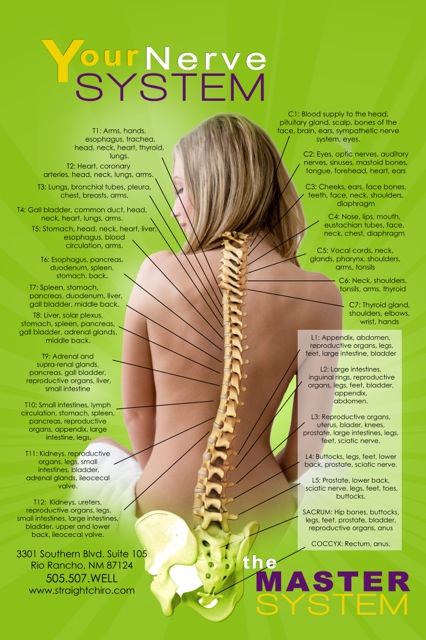
Your nerve system controls and coordinates the function of every other system in your body. Subluxation at different levels of your spine will create interference to the organs and areas of your body. The graphic below will give you an idea of how something like asthma could be related to subluxation in the spine.

This does not mean that getting adjusted is the cure for asthma or any other condition. It just means that correcting subluxation in the individual areas of your spine may contribute to improved health in those organs.

The chart

How each level connects.

Illustration of a nerve chart showing spinal subluxations affecting health, by Synergy Spine and Nerve Center.
Synergy Spine and Nerve Center, Spinal Nerve Chart

Spinal levels & related areas.

A reference guide to the regions of the spine and the organs and conditions associated with each level.

Cervical (C1C7)

7 levels
LevelOrgans & areasCommon conditions
C1Head, brain, inner & middle ear, sympathetic nerve systemHeadaches, insomnia, brain fog, fatigue, dizziness
C2Eyes, optic nerve, sinuses, tongueSinus issues, allergies, vision problems
C3Cheeks, outer ear, face bonesFacial neuralgia, acne, eczema
C4Nose, mouth, lips, eustachian tubeHay fever, hearing loss, runny nose
C5Vocal cords, neck glands, pharynxHoarseness, sore throats, laryngitis
C6Neck muscles, shoulders, tonsils, thyroidStiff neck, chronic cough, thyroid problems
C7Thyroid gland, shoulders, elbowsBursitis, thyroid issues, shoulder pain

Thoracic (T1T12)

12 levels
LevelOrgans & areasCommon conditions
T1Hands, wrists, fingers, esophagus, tracheaAsthma, cough, hand/finger pain
T2Heart (incl. valves), coronary arteriesFunctional heart conditions, chest pain
T3Lungs, bronchial tubes, pleura, chest, breastBronchitis, pleurisy, pneumonia, congestion
T4Gall bladder, common ductGallbladder issues, jaundice, shingles
T5Liver, solar plexus, bloodLiver conditions, low blood pressure, fatigue
T6StomachStomach trouble, indigestion, heartburn
T7Pancreas, duodenumUlcers, gastritis
T8Spleen, diaphragmLowered immunity, hiccups
T9Adrenal glandsAllergies, hives, low energy
T10KidneysKidney problems, chronic tiredness
T11Kidneys, uretersSkin conditions like acne, eczema, boils
T12Small intestines, lymph circulationRheumatism, gas pains, infertility

Lumbar / Sacral (L1SCoccyx)

7 levels
LevelOrgans & areasCommon conditions
L1Large intestines, inguinal ringsConstipation, colitis, diarrhea, hernias
L2Appendix, abdomen, upper legCramps, varicose veins, breathing difficulty
L3Sex organs, uterus, bladder, kneeBladder issues, menstrual trouble, knee pain
L4Prostate, lower back muscles, sciatic nerveSciatica, low back pain, painful urination
L5Lower legs, ankles, feetPoor circulation, swollen ankles, weak arches
SacrumHip bones, buttocksSacroiliac problems, spinal curvature
CoccyxRectum, anusHemorrhoids, pruritus, pain at end of spine on sitting

Important note

Chiropractic adjustments are not a cure for asthma, thyroid problems, or any other condition. The nerve chart is a visual aid to show how subluxation at a given spinal level may contribute to interference with the organs supplied by those nerves. Reducing or removing that interference helps the body do what it is already designed to do, heal and regulate itself.

What symptoms are you struggling with that you'd like to relieve?