
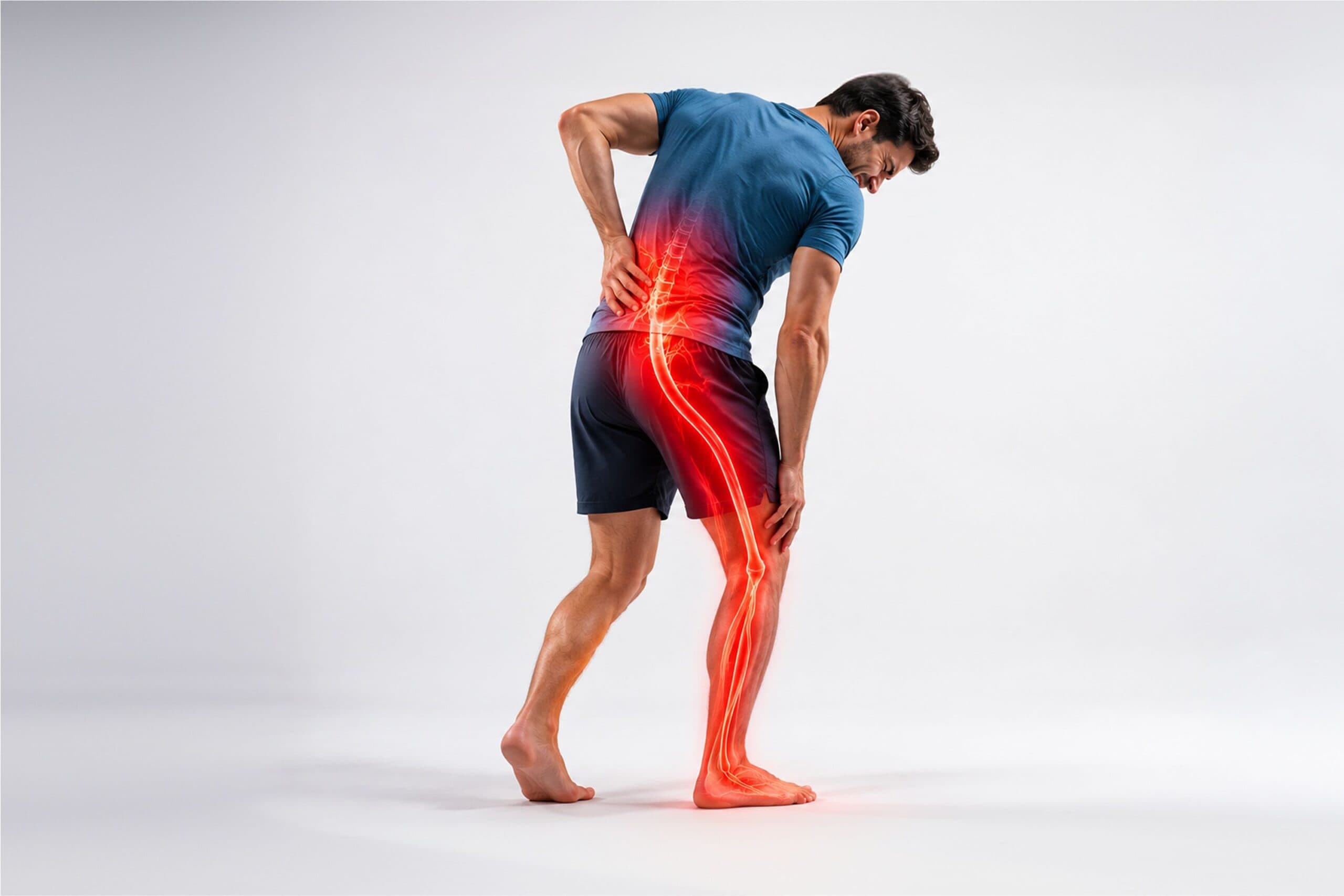
Long drives around Rio Rancho and Albuquerque can be tough when you have sciatica. Sitting in the car, even for a short commute, often puts extra pressure on the lower back, hips, and legs. That pressure can irritate the sciatic nerve and make symptoms flare.
Daily routines like road trips, school drop-offs, sports practices, and grocery runs all add up to more time in the driver's seat. With the right setup, you can often make those drives more comfortable. In this article, we will walk through simple, practical tips you can use today so driving is a little easier on your back and legs.
Set Your Seat Height and Distance for Happy Hips
Seat height has a big effect on your hips and low back. When your seat is too low, your knees come up higher than your hips. This closes off the hip angle and can put more stress into the lower back and sciatic area.
Aim for a position where:
- Hips are slightly higher than your knees
- Feet rest flat on the floor or pedals
- Thighs are supported without a hard edge cutting under them
If your car allows it, raise the seat until you can see clearly over the wheel while keeping that open hip angle. In taller vehicles like SUVs and trucks, you may need to lower the seat a bit so you are not shrugging your shoulders toward your ears.
Distance from the pedals and steering wheel also matters. You want:
- Knees slightly bent, not fully straight when your foot is on the pedal
- No need to reach or lean forward to turn the wheel
- Shoulders relaxed, not rounded toward the dashboard
- Steering wheel about 10 to 12 inches from your chest
If your leg or back hurts more after a drive, try this quick at home test: on your next trip, adjust just one thing at a time. First, move the seat slightly closer or farther from the pedals and notice any change. Next time, try a small height change. Then, adjust the recline. If pain keeps building no matter what you do, a sciatica doctor in Rio Rancho can look at your overall posture in the office and help you find a better setup.
Build Lumbar Support That Actually Supports You
Your lower back naturally has a gentle S-curve. When that curve flattens for too long, pressure can build on the joints, disks, and nearby nerves. In the car, we want to support, not squash, that natural shape.
Many cars now have built-in lumbar controls. Start with them on the lowest setting, then slowly increase until you feel light support right at your beltline. You should feel contact without a hard push.
If your seat does not have lumbar support, you can try:
- A small rolled towel placed at your beltline
- A thin lumbar cushion, not thick or bulky
- A soft pad that supports the whole lower back, not just one point
Keep these tips in mind:
- Do not place support too low under the tailbone
- Avoid over-arching your back to “sit up straight” too hard
- Keep both sit bones evenly weighted so one hip is not taking all the load
The seat back angle also helps. A slight recline usually feels better than sitting totally upright, but too much recline makes you reach forward with your arms and head. Aim for a small lean back so your shoulders rest on the seat, your chin stays level, and your eyes look straight ahead without effort.
Tune Mirrors to Protect Your Neck, Back, and Nerves
Every time you twist or lean to see out a mirror, that movement travels down your spine to your hips and legs. If your sciatic nerve is already sensitive, those repeated twists may increase symptoms.
Set your mirrors so your eyes do most of the work and your body stays quiet:
- Rearview mirror: Sit in your normal, relaxed position, then adjust so you see straight out the back window without lifting your chin or sliding forward.
- Side mirrors: From your usual posture, set them a bit wider so you just barely see the side of your car. This can reduce blind spots and limit the need to twist your torso.
Use the rule: eyes move, body stays. Turn your head slightly and move your eyes to scan, instead of turning from the waist or shoulders. This protects the lower back and can reduce irritation along the sciatic nerve pathway.
If you share a car with someone else, take 10 to 20 seconds at the start of each drive to reset your mirrors for your posture. That tiny habit can save your neck and back a lot of strain over time.
Smart Stretch Breaks for Rio Rancho Drivers
Even with a great seat setup, staying in one position too long often makes sciatica worse. A simple habit is the “30 to 60 minute rule.” On longer drives, try to:
- Stop every 30 to 60 minutes
- Get out of the car
- Stand, walk, and reset your posture for a few minutes
In the New Mexico heat, these breaks also help with general fatigue. When you stop, you can try easy, gentle movements beside the car, such as:
- Short walks around the parking lot or rest area
- Slow hip shifts side to side while standing
- Supported back extension, resting your hands on the trunk and gently easing your hips forward
- Light hamstring and calf motion, like placing your heel on a low step and slowly straightening and bending the knee
Avoid bouncing or forcing any stretch. Movements should feel like a reset, not a workout.
For real life schedules, you might not get a full break as often as you like. In school pick-up lines or during a long wait at a drive-thru, you can:
- Roll your pelvis gently forward and back against the seat
- Squeeze and release your glutes a few times
- Do slow ankle circles when stopped with the car in park
These tiny “mini-breaks” add up and often help more than one big stretch session at the end of the day.
When to See a Sciatica Specialist in Rio Rancho
Some stiffness after a long drive is common. It often eases after you stand up, walk a little, and move around. But certain signs should not be ignored.
Pay attention if you notice:
- Pain that shoots or zaps down the leg
- Numbness or tingling in the leg or foot
- Leg weakness or a feeling that the leg may give out
- Pain that keeps getting worse, even after seat changes and stretch breaks
At Synergy Spine & Nerve Center in Rio Rancho, we focus on helping families move with less pain and return to more active, drug-free living. A sciatica doctor in Rio Rancho can review how you move, how you sit in the car, and what your day looks like at work and at home. From there, we can build a plan that fits your body and your goals, including guidance on driving posture and simple home strategies that support your care.
If driving has become something you dread because of your back or leg pain, start by tracking how you feel on different trips for about a week. Note what makes things better or worse, how long you sit, and what seat changes you try. Bringing those notes to a professional can be a helpful step toward safer, more comfortable time behind the wheel.
Start Relieving Sciatica Pain With Personalized Care Today
If shooting leg pain or numbness is limiting your daily life, we are ready to help you find lasting relief. Schedule a visit with a trusted sciatica doctor in Rio Rancho at Synergy Spine & Nerve Center so we can evaluate your condition and explain the most appropriate treatment options. Our team focuses on addressing the root cause of your pain so you can move with confidence again. To book an appointment or ask questions, simply contact us today.
About the Author
Dr. Brad Fackrell
Synergy Spine and Nerve Center · Rio Rancho, NM
Dr. Brad and the Synergy team are committed to gentle, principled chiropractic care that supports your body's natural ability to heal. Have a question about an article? Bring it up at your next visit, we love the conversation.